

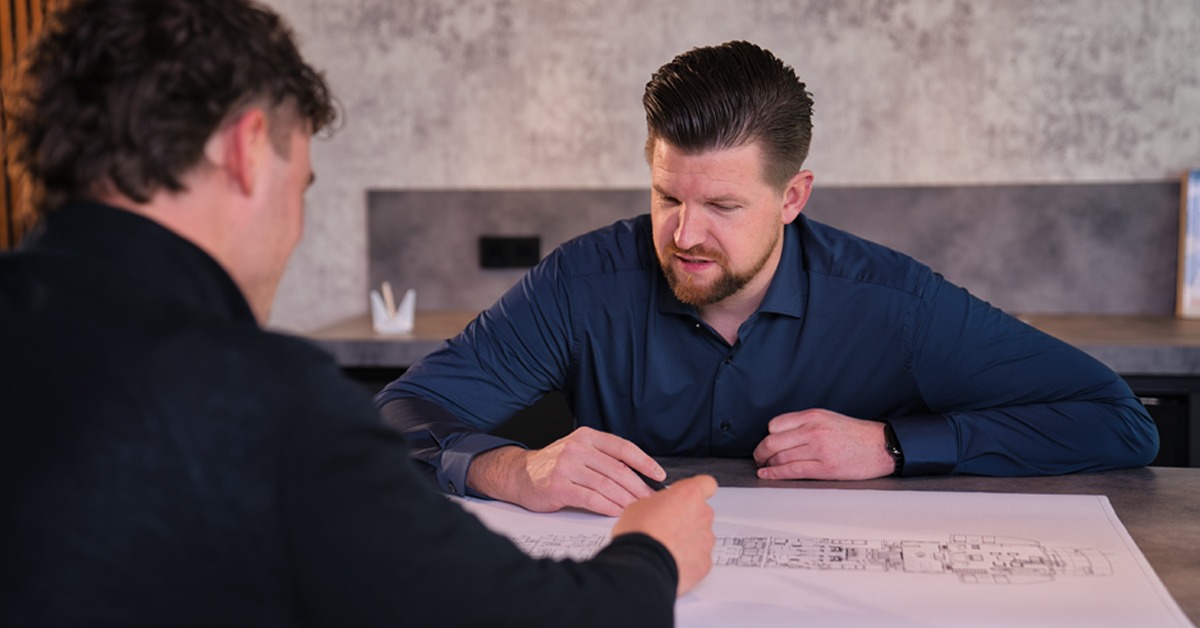
By: Lars Hofman and Marcel Kruithof
Every yard has its own way of working. Documents are released differently, decisions are made differently and communication within project teams varies from one organisation to another. Reaching the point where external expertise is needed is one thing. Making that collaboration work in practice is something else entirely.
Technical knowledge is only part of the story
Technical knowledge is rarely the limiting factor. Naturally, you choose an engineering partner with experience in the type of work you do. That is expected. A project, however, consists of more than models and drawings. It consists of people. Skilled professionals. Colleagues who are used to working together. Teams that follow certain standards, habits and ways of communicating. The fit has to be right.
Things that may seem relatively unimportant at first glance, such as drawing numbers, document structures, release procedures and communication style, often have a major influence on how quickly external engineers find their place within a project. In practice, these details usually matter far more than people initially expect.
Lars Hofman:
“Technical knowledge does not determine how quickly you add value. Understanding how a yard works does. I think it is extremely important that a yard can keep moving and genuinely rely on the external expertise they have brought in. That means connecting properly to the way they work. Before you know it, you can end up building an organisation alongside the existing organisation. It becomes inefficient, more prone to mistakes and, quite frankly, less enjoyable for the team. I sometimes say that we have a lot of colleagues, because that is genuinely how it feels.”
As projects become busier, additional capacity should create room to move. Nobody is looking for an extra management layer or a separate island within the project. Roles and responsibilities already exist for a reason.
Lars Hofman:
“When things are working well, it should not feel as though an external engineering company has joined the project. We take responsibility for the scope we are asked to deliver and make sure it keeps moving forward. At the same time, we continue to work within the yard’s structure. Discipline leads keep their role, decision making stays connected to the project and the whole team keeps moving in the same direction.”
That allows everyone to focus on what really matters. The project.
Sometimes collaboration requires more attention than the engineering itself
Many yards will recognise this situation. The engineering quality is good, yet over time the collaboration starts demanding more and more attention. Additional meetings appear. Information begins flowing through different channels. The engineering company’s way of working starts getting in the way. It rarely happens overnight.
Marcel Kruithof:
“Complexity often appears when processes, responsibilities and expectations are not properly aligned. Small differences in working methods become visible in communication, decision making and planning. Eventually, more attention goes into organising the collaboration than into the project itself. In my view, you should step into the yard’s way of working, not the other way around. Even when the scope is clearly defined and could technically be executed entirely according to your own rules. The yard should remain in control, because in the end it is still a team effort. Over the years we have worked with many different systems, procedures and project organisations, which allows us to connect quickly and naturally.”
Good engineering starts with understanding how a yard works
That is why we spend time at the start of every project understanding how a yard operates. How are documents released? Which drawing standards are used? How are reviews handled? How is communication organised? And how are roles and responsibilities structured?
These are practical questions. At the same time, they often determine how quickly a collaboration starts to feel natural. Some yards have clear standards and established ways of working. In those situations, we simply connect to them. Drawing numbers, document structures and release procedures become part of our daily workflow.
Other projects are still developing their standards or are looking for additional structure. In those cases, we can help establish drawing standards, detail standards and working methods that fit the project. Over the years we have learned that every yard works differently.
Marcel Kruithof:
“The involvement should feel as though the engineers are already part of the team, without taking over or disrupting existing processes.”
A good collaboration allows the organisation to keep moving without having to reorganise itself first.
Want to know what our engineering can mean for your team at the yard? Whether you’re active in yacht building or shipbuilding, feel free to send a message to Lars Hofman or Marcel Kruithof. HOFF connects to the yard’s existing way of working and systems and, after a proper intake, quickly becomes part of the team.
HOFF • Partners in Engineering
Stationspark 950
3364 DA Sliedrecht
The Netherlands


More articles